Table of Contents
ToggleIntroduction: Why I Always Start With the Feed Bag
When a farmer calls me about low egg production, poor weight gain, wet litter or unexpected mortality, I usually start with a few simple questions:
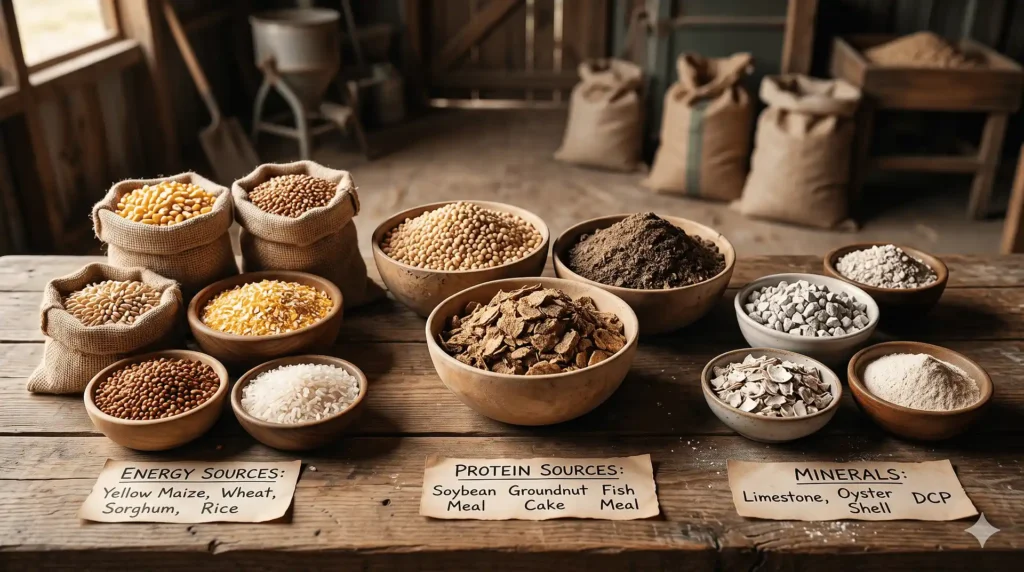
What are the birds eating? How much are they eating? And how clean is the water?
Vaccination, biosecurity, housing and disease control are all critically important. But a flock that is poorly nourished will underperform even in a well-designed poultry house, and it will cope less effectively with disease and environmental stress.
Feed is also where a large part of the farm’s money goes. In commercial poultry production, feed can account for roughly 60–70% of total production cost. Nutrition is therefore not only a biological issue. It is one of the most important factors in farm profitability.
Give too little of an essential nutrient and you may lose growth, egg production, immunity or shell quality. Give too much and you may simply pay for nutrients the bird cannot use, which may end up being excreted into the litter.
This guide brings the basic science and practical farm principles together in one place. It covers the six nutrient classes, water, feed intake, ingredients, feeding stages, heat stress, feed quality, field problems and important developments in poultry nutrition.
Important: Nutrient requirements vary with strain, age, production level, environment, health status and management. Use this article as an educational reference and cross-check practical feed specifications against the current guide for your particular commercial strain.
Poultry Nutrition at a Glance
If you remember only a few things from this guide, remember these:
Water is the most important nutrient and should be monitored every day.
Energy strongly influences feed intake, but energy alone does not make a balanced diet.
Crude protein is not the whole story. Amino-acid profile and digestibility matter.
Calcium and phosphorus are critical for bone development and eggshell quality.
Nutrient intake = nutrient concentration × feed intake.
Heat stress reduces feed intake, so diets may need greater nutrient density in hot weather.
Do not dilute a complete feed with grain unless the diet was formulated for it.
Mycotoxins, rancidity, poor storage and inaccurate mixing can turn a good ration on paper into poor-quality feed.
Modern formulation uses digestible amino acids, not crude protein alone.
The current breeder or strain guide should take priority over generic nutrient tables.
When birds perform poorly, check feed, water, environment and disease together instead of assuming the problem is nutritional.
What's New in 2026?
Three developments are particularly important.
1. NASEM has updated the poultry nutrient requirements
The previous NRC poultry requirements dated from 1994. The 10th Revised Edition of Nutrient Requirements of Poultry, published by the National Academies of Sciences, Engineering, and Medicine in 2026, is the first major revision in about 31 years. It has 21 chapters and expands and updates recommendations, including greater use of modelling, digestible amino-acid concepts, updated ingredient information and broader coverage of poultry categories. Details are in Section 18.
2. Breeder companies continue to update nutrition specifications
Commercial strain recommendations continue to evolve. Aviagen’s 2022 broiler nutrition specifications use standardized ileal digestible amino acids, and in 2025 the company released updated broiler management handbooks with a separate Nutrition Supplement.
3. Antimicrobial regulation in India is becoming stricter
India has introduced restrictions on a growing list of antimicrobials for animal use, from the 2019 colistin ban to the 2025 notification covering 34 products and a further draft in September 2026. The regulatory position continues to evolve, so verify the current rules before using any antimicrobial or medicated feed. The dated timeline is in Section 23.
1. The Six Major Nutrient Classes in Poultry Nutrition
Everything a chicken needs can be grouped into six major classes:
- Water
- Carbohydrates
- Fats
- Proteins and amino acids
- Minerals
- Vitamins
Textbooks and references differ in how they count individual nutrients. Some say at least 38, others more than 50. The exact number matters less than the principle:
A deficiency of even one important nutrient can limit performance, even when all the other nutrients are adequate.
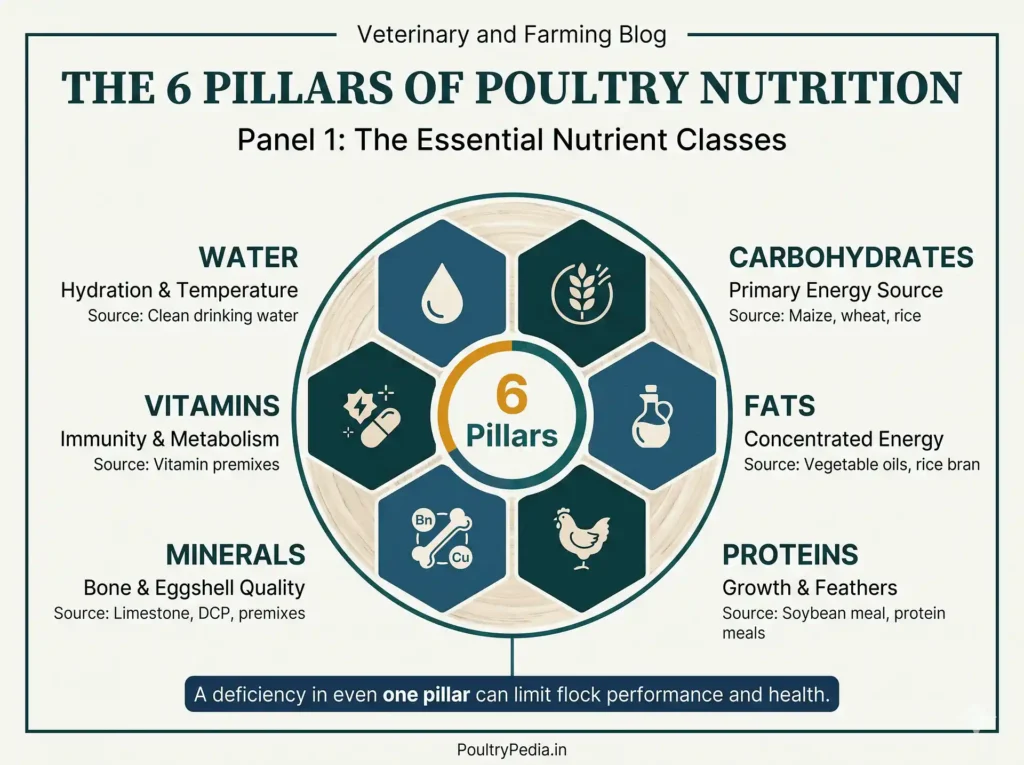
| Nutrient | Main role | Common sources |
|---|---|---|
Water |
Hydration, digestion, temperature control |
Drinking water |
Carbohydrates |
Main energy source |
Maize, wheat, sorghum, rice |
Fats |
Concentrated energy and essential fatty acids |
Oils, rice bran, other fat sources |
Protein / amino acids |
Growth, muscle, feathers, eggs |
Soybean meal and other protein meals |
Minerals |
Bone, eggshell, metabolism, electrolyte balance |
Limestone, DCP, mineral premixes |
Vitamins |
Metabolism, immunity, reproduction, growth |
Vitamin premixes and ingredients |
Water: The Nutrient We Forget
Water is one of the most neglected parts of poultry nutrition. Birds can survive longer without feed than without water. Water supports digestion, nutrient transport, waste removal and temperature regulation. Chicks are approximately 80% water at hatch, and water makes up a large proportion of blood and body tissues. Birds do not have sweat glands, so during heat stress they rely heavily on increased respiration and drinking to dissipate heat.
Water figures worth remembering
Under comfortable conditions, birds commonly drink around 1.5 – 2 times the weight of feed consumed.
Above about 32°C, water intake can increase substantially, with some references reporting increases of roughly 30 – 50% compared with more comfortable temperatures.
Water deprivation beyond about 12 hours can adversely affect growth and production.
Prolonged deprivation beyond about 36 hours can have severe consequences, including increased mortality.
A laying hen can consume a substantial proportion of her daily water during the final hours of daylight, so a drinker problem in the evening can quickly affect production.
Approximate water intake
These are monitoring references rather than rigid targets. Actual intake changes with temperature, feed composition, age, health, housing and production.
| Bird / stage | Approx. litres per 1,000 birds per day at ~20–21°C |
|---|---|
Layer pullet, 4 weeks |
100 |
Layer pullet, 12 weeks |
160 |
Layer pullet, 18 weeks |
200 |
Laying hens, 50% production |
220 |
Laying hens, 90% production |
270 |
Broiler, week 1 |
65 |
Broiler, week 2 |
120 |
Broiler, week 3 |
180 |
Broiler, week 4 |
245 |
Broiler, week 5 |
290 |
Broiler, week 6 |
330 |
Broiler, week 7 |
355 |
Broiler, week 8 |
370 |
A simple farm habit. Record water intake and feed intake every day. A sudden change in either is often an early warning that something has changed in the flock, and a fall in water intake can show up before feed intake or egg production drops.
Also test your water. Depending on the source, this may include pH, hardness, nitrates, sulfates, sodium, iron and bacterial contamination. High sodium in drinking water adds to dietary sodium and can contribute to excessive water intake and wet litter. I have seen wet litter blamed on feed when the water supply was actually part of the problem.
2. Carbohydrates: The Main Energy Source
Carbohydrates form the largest part of many poultry rations. Common cereal energy sources include maize, wheat, sorghum, pearl millet (bajra), rice and barley.
Starch and sugars are generally well digested. Cellulose and other non-starch polysaccharides are much less digestible, and they appear on the feed label as crude fibre.
Some components can also increase intestinal viscosity and interfere with nutrient utilisation:
- β-glucans are important in barley and oats.
- Arabinoxylans are important in wheat and rye.
This is one reason enzymes such as xylanase and β-glucanase are used in suitable diets.
3. Fats: Concentrated Energy
Fat supplies approximately 9 kcal/g, compared with roughly 4 kcal/g for carbohydrate, making it more than twice as energy-dense. Practical rations may contain supplemental fat depending on formulation, ingredient availability and production stage.
Fat does more than add energy. It:
- supplies essential fatty acids such as linoleic acid, which birds cannot make
- carries fat-soluble vitamins A, D, E and K
- reduces feed dust
- can improve palatability
- increases dietary energy density
The problem with rancid fat
Fat deteriorates through oxidation, especially with heat, oxygen, moisture and prolonged storage. Rancid fat can reduce palatability and damage nutrients, including vitamins A and E. Approved antioxidants may be used to help protect fatty ingredients and feeds from oxidation.
Rice polish and rice bran, which are common in Indian rations, can contain substantial oil and therefore require careful storage in hot, humid conditions
Practical rule: buy fatty ingredients fresh, store them properly and avoid unnecessarily long storage in hot conditions.
4. Protein and Amino Acids: Think Beyond Crude Protein
One of the most important concepts in modern poultry nutrition is this:
Birds do not need crude protein for its own sake. They need amino acids in the correct amounts and proportions.
Protein is the package that delivers amino acids. The essential amino acids commonly considered in poultry nutrition are lysine, methionine, threonine, tryptophan, arginine, valine, leucine, isoleucine, histidine and phenylalanine. Some references list nine or eleven, depending on where they draw the line. Other amino acids (glycine with serine, proline, cysteine, tyrosine) can become conditionally essential depending on age, growth rate, diet and physiological conditions.
Why amino-acid balance matters
In typical maize-soybean diets, methionine, lysine and threonine are often among the first limiting amino acids. That is why supplemental DL-methionine, L-lysine and L-threonine are commonly used.
Arginine is particularly important in poultry because birds do not have a functional urea cycle like mammals.
Crude protein can mislead
Feed A: 20% crude protein. Feed B: 20% crude protein. They are not necessarily nutritionally equivalent. Two feeds with the same crude protein can differ substantially in amino-acid profile, amino-acid digestibility, ingredient quality and processing quality. That is why modern poultry nutrition increasingly focuses on digestible amino acids rather than crude protein alone.
5. Digestible Amino Acids and the Ideal Protein Concept
Modern formulation works with digestible amino acids rather than crude protein alone. Lysine is commonly used as the reference amino acid, with other amino acids expressed relative to lysine. This is the ideal protein concept.
Why digestibility matters
The amount of an amino acid present in an ingredient is not necessarily the amount available to the bird. Processing, anti-nutritional factors, heat damage, fibre and ingredient quality can all affect digestibility. This is particularly important with canola meal, cottonseed meal, meat and bone meal and feather meal.
Commercial strain specifications therefore increasingly use standardized ileal digestible (SID) amino acids.
6. Minerals: The Foundation of Bone and Eggshell Quality
Minerals are needed in relatively small quantities, but their importance is enormous.
Calcium and phosphorus
Calcium and phosphorus are essential for bone development, eggshell formation, muscle function and metabolism.
Phosphorus is more complicated than it first appears. Roughly 60–80% of the phosphorus in plant ingredients is bound in phytate and is less available to the bird without phytase. That is why diets distinguish between total phosphorus and non-phytate (available) phosphorus.
Calcium-to-phosphorus balance. The appropriate relationship changes with age and production stage.
- For growing birds, a calcium-to-available-phosphorus ratio around 2:1 is a useful general reference.
- In laying hens, calcium requirements are much higher because large quantities are deposited into eggshells, while the available phosphorus requirement falls through the cycle. Published reference ratios widen from about 8:1 to 11:1 between early and late lay, but the correct formulation should be based on the bird’s stage, production, feed intake and current commercial recommendations rather than one universal ratio.
Electrolytes
Sodium, potassium and chloride regulate acid-base balance, water balance, nerve function and muscle function. Dietary electrolyte balance (Na + K − Cl, in mEq/kg) of about 250 is a commonly cited reference for broiler growth, and it becomes particularly important during heat stress. Excess dietary salt can increase water intake and contribute to wet litter.
Trace minerals
Zinc, manganese, iron, copper, iodine and selenium are required in small quantities but are essential. They are commonly supplied through mineral premixes. Organic or complexed trace-mineral sources may have advantages in bioavailability under certain conditions, but they should not automatically be assumed to be superior in every diet.
7. Vitamins: Small Quantities, Major Consequences
Vitamins are essential for metabolism, growth, immunity, reproduction and tissue maintenance. They are commonly divided into fat-soluble (A, D, E, K) and water-soluble (B-complex vitamins and choline).
Points that are easy to forget
- Fat-soluble vitamins can be stored in the body more readily than water-soluble vitamins.
- Vitamin D3 is the important supplemental form for poultry. Vitamin D2 is much less effectively utilised.
- Vitamin E requirements can be influenced by dietary fat composition and selenium status.
- Vitamins can deteriorate through exposure to heat, moisture, oxygen, light, storage time and interactions with other feed components.
- Birds normally synthesise vitamin C, but supplementation may be useful during heat stress or other challenging conditions.
This is why premix quality and storage matter.
8. Why No Two Flocks Have Exactly the Same Nutrient Requirement
Published nutrient tables are useful starting points, but they are not universal prescriptions. Actual requirements depend on:
- Genetics. Strains differ in growth rate, egg number, egg size, mature body weight and feed efficiency.
- Age and sex. Young and mature birds have different requirements, and males and females can also differ.
- Production objective. A broiler is fed for efficient growth. A layer is fed to support egg production while maintaining body weight, skeletal reserves and health. A broiler breeder is deliberately managed to control body weight and reproductive performance.
- Temperature. Birds eat less during heat stress and more in the cold, so nutrient concentration may need to move in the opposite direction to feed intake.
- Housing. Housing system, stocking density and activity alter energy expenditure. Free-range and cage-free systems can increase activity and energy expenditure.
- Health. Disease can alter feed intake, digestion and nutrient utilisation. For example, intestinal disease can reduce absorption and alter amino-acid utilisation.
Practical rule: use general tables as references, but use the current commercial strain or breeder guide as the primary formulation reference.
9. Feed Intake: The Missing Part of Many Nutrition Discussions
A diet is only as good as the amount the bird actually eats.
Nutrient intake = nutrient concentration × feed intake
If feed intake changes, actual nutrient intake changes even when the formulation remains exactly the same.
What affects feed intake? Genetics, age, health, temperature, feed energy density, nutrient balance, stocking density, feeder access, feed form and water availability.
Birds regulate intake partly according to their energy requirement, provided other nutrients are adequate. When energy density increases, feed intake may fall. Therefore, the concentration of protein, amino acids, vitamins and minerals may need to increase so daily nutrient intake remains adequate.
During heat stress, a more nutrient-dense feed can help compensate for reduced feed intake.
Broiler breeders and some layer programmes intentionally restrict feed. When feed is restricted, nutrient concentration must be carefully matched to the expected daily feed intake.
10. Feeder Management Matters More Than Many Farmers Realise
A nutritionally perfect feed cannot help birds that cannot reach it properly. Poor feeder adjustment or overcrowding can create uneven feed intake and uneven body weights.
Pay attention to feeder space, feeder height, feed distribution, feed wastage and competition between birds.
The feeder lip should generally be adjusted around the bird’s back level and readjusted as birds grow. If a significant proportion of the flock cannot access feed comfortably, expect uneven body weight and poor uniformity.
11. Poultry Feed Ingredients: What Works and What to Watch
Energy ingredients
| Ingredient | Main Point |
|---|---|
Maize |
Highly digestible and relatively low in fibre, but low in lysine, tryptophan and sulfur amino acids. Yellow maize also contributes xanthophyll pigments. |
Sorghum / bajra |
Can provide feeding value similar to maize in many formulations. Check sorghum quality and tannin content. |
Wheat |
A useful cereal energy source. Arabinoxylans can increase viscosity, making xylanase useful in suitable wheat-based diets. |
Barley and oats |
Contain β-glucans and generally have more fibre than maize. Inclusion depends on variety, bird age, formulation, processing and enzyme use. Don’t apply a universal maximum to every diet. |
Broken rice |
A useful cereal substitute when economically available. |
Rice polish / bran |
Useful energy ingredients with substantial oil, so storage must limit rancidity. |
Rye |
Young birds may be sensitive to its fibre and non-starch polysaccharides. Ergot-contaminated grain should never be used. |
Protein ingredients
- Soybean meal is a major poultry protein source because of its high protein content, favourable amino-acid profile and digestibility. Its main weaknesses are relatively low methionine and the need to balance other amino acids. Dehulled, solvent-extracted soybean meal is widely used.
- Groundnut cake is widely used in India and can be a useful protein source. Contamination with aflatoxins is a major concern, so test high-risk lots.
- Fish meal is a concentrated, highly digestible animal protein. Quality varies with fish species, processing, freshness, storage and oxidation. High inclusion of some fish meals can affect meat or egg flavour. There is no universal maximum, so use high-quality material and formulate it for its nutrient contribution.
- Meat and bone meal, feather meal and blood meal provide concentrated protein, but digestibility and quality vary substantially. Source, processing and quality control are critical.
- Canola / rapeseed meal can be a useful alternative. Modern low-glucosinolate varieties are substantially improved compared with older rapeseed, but high inclusion can still affect nutrient use and performance depending on product quality, bird strain and formulation. Fishy egg taint can occur in susceptible brown-egg layers because of differences in trimethylamine metabolism. Don’t apply historical rapeseed recommendations automatically to modern canola meal.
- Cottonseed meal contains gossypol, which can reduce intake and interfere with nutrient use, including lysine availability.
- Legumes (peas, lentils, faba beans) can contribute useful protein and energy, but they contain various antinutritional factors. Faba beans deserve special attention in layers: high-vicine /convicine varieties can reduce egg production or egg weight at higher inclusion, while low-vicine/convicine varieties can be used more successfully when the complete nutrient profile is managed.
Mineral sources
Limestone and oyster shell are important calcium sources, and dicalcium phosphate supplies calcium and phosphorus. In laying hens, appropriately sized coarse calcium sources can release calcium more slowly and may support shell formation during the night. Remember that oyster shell is a calcium source, not insoluble grit.
12. The Golden Rule on Soybeans: Never Feed Raw Soybeans
Raw soybeans contain antinutritional factors, particularly trypsin inhibitors and lectins. They therefore require appropriate heat processing. The challenge is to apply enough heat to deactivate these factors without overheating, which damages amino acids, especially lysine.
Assessing soybean processing quality
- Urease activity helps identify under-processing, because adequate heating reduces urease activity. It is not a reliable stand-alone indicator of over-processing.
- KOH protein solubility helps identify excessive heat damage, because solubility generally falls with over-processing. A low lysine-to-crude-protein ratio can also hint at heat damage.
- Protein dispersibility index (PDI) can also provide useful information.
The practical rule: don’t judge soybean meal from one laboratory number alone. Interpret urease activity, KOH solubility, PDI, colour, processing history and amino-acid quality together with the supplier’s specification, since historical numerical cut-offs should not be treated as universal.
13. Anti-Nutritional Factors You Should Know
| Factor | Where | What it can do |
|---|---|---|
Trypsin
inhibitors |
Soybean, legumes |
Reduce protein digestion |
Lectins |
Soybean, legumes |
Interfere with gut function |
Phytate |
Many plant ingredients |
Reduces availability of phosphorus and can bind other nutrients |
β-glucans |
Barley, oats |
Increase viscosity |
Arabinoxylans |
Wheat, rye |
Increase viscosity |
Glucosinolates |
Canola, mustard |
Can affect thyroid function and intake at excessive exposure |
Gossypol |
Cottonseed |
Toxicity and reduced lysine availability |
Tannins |
Sorghum and some legumes |
Can reduce nutrient utilisation |
The aim is not to avoid every ingredient that contains an anti-nutritional factor. It is to understand the factor, control inclusion, use appropriate processing, use enzymes where beneficial and formulate the complete diet correctly.
14. Feed Form: Mash, Crumbles and Pellets
Feed form influences intake, wastage, physical quality, selective feeding and performance.
- Mash is ground and mixed feed. If it is too fine, it can create dust, stick to the beak and reduce palatability.
Crumbles are broken pellets and are commonly used for young chicks.
Pellets can improve feed intake, reduce selective feeding and improve physical quality. However, excessive conditioning temperature can damage heat-sensitive nutrients and additives, including enzymes.
Whole grains can be useful in appropriate systems, but inclusion should be introduced gradually and based on bird age, strain, grain type, diet formulation, feed form and management system. There is no universal schedule that suits every flock. For meat birds receiving whole grain, appropriate insoluble grit such as granite or suitable gravel may be used.
Particle size also matters. Appropriately coarse feed particles can support normal gizzard development and function.
15. Stage-Wise Feeding of Broilers
Always start with the current breeder or strain guide. The following are older NRC-type reference minimums, useful for sanity-checking a feed label but not a replacement for current commercial specifications.
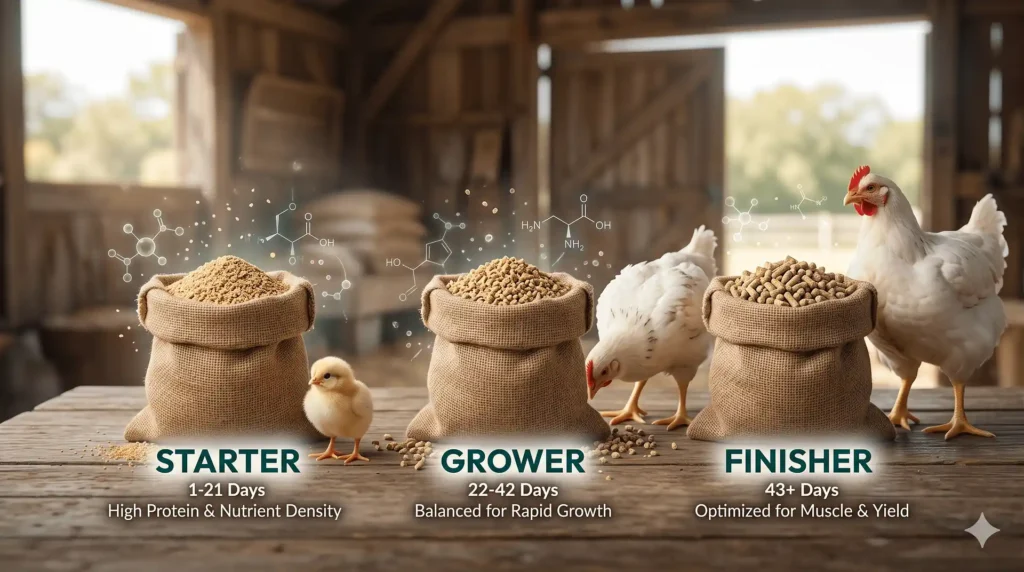
| Nutrient | Starter (1 to 21 Day) | Grower (22 to 42 Day) | Finisher (43+ Day) |
|---|---|---|---|
Metabolizable energy (kcal/kg) |
3,200 |
3,200 |
3,200 |
Crude protein (%) |
23 |
20 |
18 |
Lysine, total (%) |
1.10 |
1.00 |
0.85 |
Methionine + cysteine (%) |
0.90 |
0.72 |
0.60 |
Threonine (%) |
0.80 |
0.74 |
0.68 |
Calcium (%) |
1.00 |
0.90 |
0.80 |
Non-phytate phosphorus (%) |
0.45 |
0.35 |
0.30 |
Sodium (%) |
0.20 |
0.15 |
0.12 |
Modern commercial broilers are generally formulated using current strain-specific digestible amino-acid specifications that can differ substantially from older reference tables. As one published example, a Cobb 500 estimate puts digestible lysine at about 1.22% for weeks 0 – 3 and 1.16% for weeks 3 – 5. The commercial specification for your strain should always take priority.
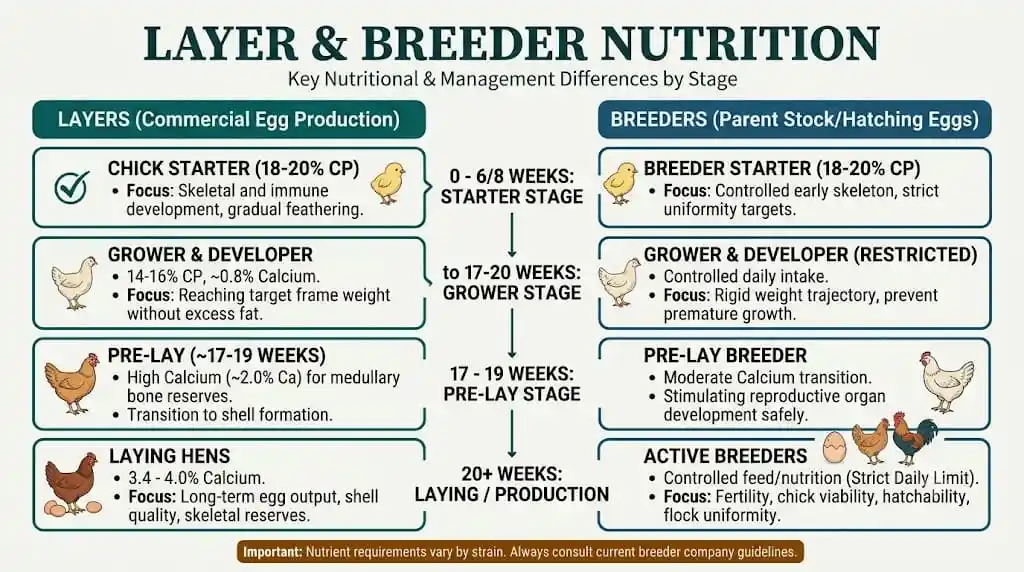
16. Layer and Pullet Nutrition
Layers have different priorities from broilers. The diet must support body-weight maintenance, egg production, eggshell quality, skeletal calcium reserves, health and longevity.
| Stage | Crude protein (%) | Calcium (%) | Available P (%) |
|---|---|---|---|
Chick starter (0–6/8 wk) |
18–20 |
~0.9 |
~0.45 |
Grower / developer (to ~17–20 wk) |
14–16 |
~0.8 |
~0.45 |
Pre-lay (~17–19 wk) |
~17 |
~2.0 |
~0.45 |
Laying |
~16–19 |
~3.4–4.0 |
~0.35–0.45 |
These are broad reference ranges, not universal formulations. Adjust for strain, age, production level, feed intake, egg size, body weight and commercial recommendations.
What matters in layer management
- Calcium requirements rise substantially during lay, while phosphorus requirements generally decline as the bird matures.
- Many commercial programmes use phase feeding to match nutrient supply with changing requirements, which can help both feed cost and shell quality.
- Pre-lay diets can help build medullary bone reserves before egg production.
- Coarse calcium sources can provide a slower release of calcium.
- Do not dilute a complete layer ration with uncontrolled grain addition, which also raises fatty-liver risk.
- Brown-egg strains and particular management systems may use controlled feeding programmes, but this should be based on strain recommendations.
17. Broiler Breeder Nutrition
Broiler breeders are very different from commercial broilers. If fed freely, they can become excessively heavy, and excessive body weight can damage reproductive performance. Therefore breeder programmes use controlled feeding.
The important questions are not simply how much feed the breeder received. They are also:
- What was the nutrient concentration?
- What was the body-weight trajectory?
- How uniform was the flock?
- Was the target body weight achieved?
- How was reproductive performance affected?
For breeders, the current breeder company’s nutrition and management guide should be the primary reference.
18. What Is Changing in Poultry Nutrition?
Poultry nutrition is moving toward greater precision. Major trends include digestible amino-acid formulation, precision feeding, better ingredient databases, enzyme technology, lower crude-protein diets with balanced amino acids, alternative proteins, improved early-life nutrition, greater attention to gut health and antimicrobial stewardship.
The 2026 NASEM update
The previous major NRC poultry requirements were published in 1994. The 10th Revised Edition of Nutrient Requirements of Poultry, published by the National Academies in 2026 after about 31 years, has 21 chapters and represents a major update. Important features include:
- Weight-based broiler recommendations. The new work places greater emphasis on body- weight-based requirements rather than relying only on age. This matters because different genetic lines can reach the same body weight at different ages.
Modelling. The committee used mathematical models to estimate requirements, including amino acids for broilers and layers, and considered the strength of the underlying evidence.
Digestible amino acids. The updated recommendations place substantial emphasis on digestible amino-acid concepts, consistent with modern commercial formulation.
Energy. Requirements are expressed on a nitrogen-corrected apparent metabolizable energy (AMEn) basis while accounting for differences in ingredient energy values. Some commentators see this as a step toward net-energy thinking, which matters for hot-climate producers because of the heat increment.
Updated ingredient information. The edition incorporates updated feed-ingredient data on more than 100 feedstuffs, with broader consideration of alternative ingredients.
Broader scope. It covers breeders, ducks, geese and Japanese quail, with topics such as feed processing, gut physiology and environmental effects.
An important caveat. NASEM recommendations should be treated as a scientific reference, not as a universal commercial feed formula. Commercial strain guides, local ingredient analyses and actual farm performance remain important. My approach is: NASEM as the scientific baseline, the strain guide as the commercial target, and feed testing and farm records as the reality check.
Breeder-company updates
Aviagen’s 2022 broiler nutrition specifications moved to standardized ileal digestible amino acids and rebalanced the early-life protein and energy profile. In 2025 the company released updated broiler management handbooks and, for the first time, a separate Nutrition Supplement for nutritionists. Industry press also reports an updated parent stock nutrition specification; check the company’s website for the current version.
If you are working with Ross, Arbor Acres, Indian River or another commercial strain, use the latest available company specification for that specific strain.
19. Digestibility: Why the Number on the Feed Tag Isn't Enough
There are several ways to describe amino-acid digestibility.
- Apparent ileal digestibility (AID) measures the disappearance of amino acids before the end of the small intestine, but doesn’t correct for amino acids from the bird’s own endogenous secretions. It tends to underestimate digestibility and doesn’t add up reliably in mixed diets.
- Standardized ileal digestibility (SID / SIAAD) corrects apparent digestibility for basal endogenous amino-acid losses. Its values are additive, which makes them more useful for formulation. In one corn-soy analysis, AID underestimated amino-acid digestibility by about 7%, while SID cut the prediction error to around 1%.
- True ileal digestibility (TID) attempts to account for additional endogenous losses but is difficult to measure routinely.
The practical message is simple: two ingredients can contain similar crude protein or total amino-acid concentrations but provide different amounts of usable amino acids to the bird.
20. Lower Crude Protein With Balanced Amino Acids
One important development is the ability to reduce crude protein while maintaining an adequate amino-acid profile, by supplementing limiting amino acids such as methionine, lysine, threonine and valine and, depending on the diet and stage, glycine, isoleucine, arginine and tryptophan.
Potential benefits: lower nitrogen excretion, lower ammonia production, potentially drier litter, lower metabolic heat production and potentially improved feed economics.
Studies and meta-analyses report roughly a 10% fall in nitrogen excretion for each 1 percentage point reduction in dietary crude protein, provided digestible amino acids are kept adequate. The size of the response depends on bird age, degree of protein reduction, diet composition and amino-acid supplementation.
There is a limit. Reduce protein too far and another amino acid becomes limiting. Never reduce crude protein simply because a lower-protein diet looks cheaper. The complete amino-acid profile must be reformulated, preferably with a qualified poultry nutritionist.
21. Enzymes in Poultry Nutrition
Enzymes can improve nutrient utilisation, but they are not magic additives.
- Phytase releases phosphorus bound in phytate and can also improve nutrient utilisation by reducing phytate-related effects. Reported gains in amino-acid digestibility are usually modest (a few percent), and studies commonly use doses of about 500–1,000 FTU/kg.
- Xylanase reduces the negative effects of arabinoxylans, particularly in wheat-based diets.
- β-glucanase is relevant to diets with significant barley or oats. Xylanase combined with phytase has shown synergy in wheat diets.
- Protease can improve protein utilisation in suitable diets and may allow formulation adjustments when properly evaluated.
Enzyme response depends on the product, dose, diet composition, ingredient quality, bird age, processing conditions and heat exposure during pelleting. Don’t assume that a particular enzyme will always produce a fixed percentage improvement. Use the manufacturer’s matrix values carefully and verify performance under your own farm conditions.
22. Alternative Proteins and Early-Life Nutrition
Alternative proteins. Insect meals, microalgae and single-cell proteins are being evaluated as alternatives to soybean meal. They must be evaluated carefully for amino-acid profile, digestibility, anti-nutritional factors, mineral availability, contamination, consistency and economic viability. In insect meal, chitin contains non-protein nitrogen, so the standard 6.25 factor can overstate crude protein.
Early-life nutrition. Research continues into in-ovo feeding, early gut development, probiotics, early amino-acid supply and post-hatch digestive development. These areas are promising, but not every experimental technique is ready for routine commercial use.
23. Antibiotics, Regulation and the Changing Role of Nutrition in India
India’s antimicrobial regulations have changed considerably in recent years. Here is the timeline as I understand it from published reports:
| When | What Happened |
|---|---|
2019 |
Colistin and its formulations were prohibited for use in food-producing animals, poultry, aquaculture and animal feed supplements. |
October 2024 |
FSSAI published a list of antibiotics prohibited at any stage of production of meat, milk, poultry, eggs and aquaculture products. |
May 2025 onward |
The Health Ministry proposed, and then notified, restrictions on 34 antimicrobial, antiviral and antiprotozoal products for animal use, aligned with the EU’s list of reserved antimicrobials. Check the CDSCO notification for the exact products. |
July 2025 |
A further order addressed the use of antibiotics as growth promoters in animals. |
May 2026 |
According to reporting by the Centre for Science and Environment, the EU revised its list, and India was added to the countries permitted to export animal products to the bloc after September
2026. |
September 2026 |
A notification concerning carboxypenicillins and phosphonic-acid derivatives was published as a draft. Verify the final legal status against the latest official notification before presenting it to farmers as a prohibition. |
What this means for nutrition
As antimicrobial use becomes more tightly controlled, nutrition and gut-health management become even more important. One worldwide data point shows what happens when growth-promoting antibiotics are removed without compensation: in one study, feed conversion ratio worsened from 1.66 to 1.72.
The answer is not to look for a replacement drug. A stronger approach combines balanced nutrition, appropriate crude-protein levels, adequate digestible amino acids, clean water, appropriate enzyme use, good litter management, vaccination, biosecurity, environmental management, appropriate stocking density and veterinary oversight.
Medicated feeds, coccidiostats and antimicrobials must be used according to applicable regulations, product instructions and withdrawal requirements. Always verify current Indian requirements before making a treatment or feed-medication decision.
24. Common Nutritional Problems in Poultry
Nutritional problems often have several causes.
| Problem | Possible causes | What to check or do |
|---|---|---|
Thin or soft eggshells |
Low Ca, P or D3; heat stress; poor feed intake; grain diluting a complete ration |
Feed formulation, calcium, phosphorus,
D3, heat stress. Use coarse limestone
or shell. |
Fatty liver haemorrhagic syndrome (sudden deaths in healthy-looking, high-producing hens) |
Excess energy, obesity, production stress; often corn-heavy feeding |
Body weight, energy intake, diet, management. Don’t feed corn alongside
a complete ration. |
Perosis / twisted legs |
Choline, manganese, biotin or other deficiencies |
Premix, starter feed, mineral and vitamin supply. Distinguish from spraddle leg (both legs, usually floor or injury). |
Poor growth / feathering |
Amino-acid imbalance, disease, poor feed quality |
Digestible amino acids, feed analysis, disease status. |
Wet litter |
Excess water, electrolytes, poor gut health, mycotoxins, viscous grains, ventilation |
Feed, water, sodium, toxins, litter and environment. |
Reduced egg size |
Energy, protein, amino-acid or linoleic-acid imbalance |
Feed formulation and ingredient quality. |
Poor feathering, skin problems, nervous signs |
Vitamin or mineral deficiency, disease, poor premix quality |
Premix, storage, feed analysis, disease. |
Don't diagnose from one sign alone
Many nutritional signs resemble infectious disease, toxin exposure, management problems, environmental stress or water-quality problems. When performance changes suddenly, check feed + water + flock records + environment + disease status before making major dietary changes. That is where veterinary judgement matters.
25. Heat Stress: How Nutrition Should Change in Summer
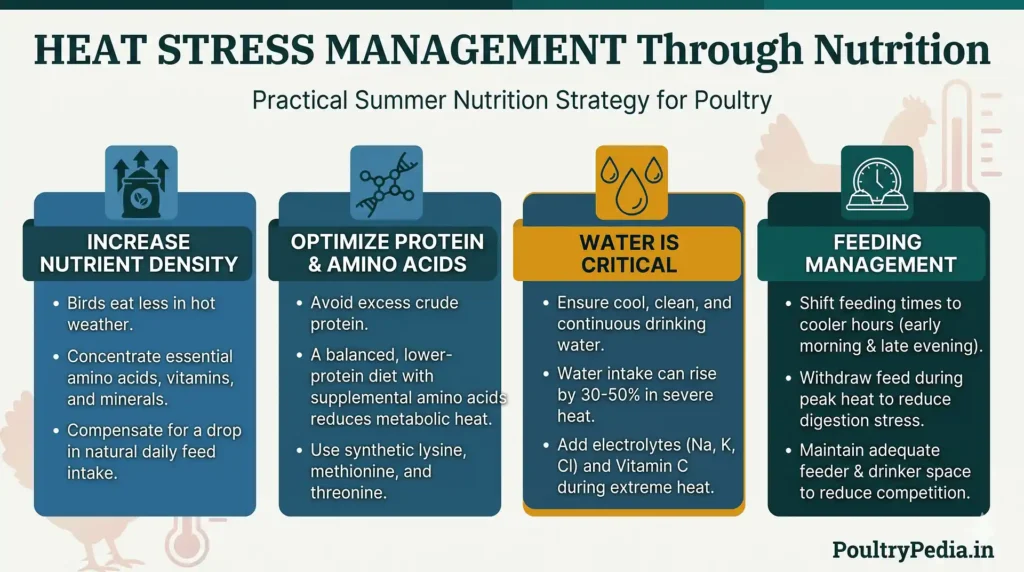
Heat stress is one of the biggest environmental challenges in hot climates. When temperature rises, birds reduce feed intake and therefore consume less of every nutrient.
- Increase nutrient density. If birds eat less, each kilogram of feed needs to supply more usable nutrients.
- Avoid unnecessary excess crude protein. A properly balanced lower-protein diet with supplemental amino acids can reduce the metabolic heat associated with protein metabolism.
- Protect water. Provide clean water, adequate flow, cool water where practical and protected water lines. Water intake can rise by 30 – 50% in severe heat.
- Consider electrolytes and vitamin support. Vitamin C and electrolytes may be useful. Changes to sodium, chloride or bicarbonate should be made according to the diet and professional advice.
- Adjust feeding time. Encourage feed consumption during cooler parts of the day.
- Pay special attention to layers. Calcium delivery and feeding strategy should support shell formation during the period of greatest calcium demand.
26. Feeding During Cold Weather
Cold conditions increase the energy required to maintain body temperature. Therefore energy density may need to increase, and dietary fat can be useful. Control feed wastage, check feeder adjustment, maintain water availability and keep brooding temperature appropriate for chicks.
A cold chick can eat poorly and grow poorly even when the feed formulation itself is excellent.
27. Feed Quality, Storage and Mycotoxins
Many mysterious poultry problems turn out to be feed-quality problems.
Mycotoxins can reduce feed intake, impair immunity, damage the liver, affect reproduction and reduce growth and production. Risk rises with poor storage and hot, humid conditions. Pay particular attention to maize, groundnut cake, rice bran and other high-risk raw materials, especially after periods of rain or poor storage.
A good mycotoxin programme: good raw materials → proper storage → testing → appropriate management.
Toxin binders and mould inhibitors can be useful components of a programme, but they are not substitutes for good-quality raw materials and proper storage.
28. Feed Storage and Mixing: Simple Rules That Prevent Expensive Problems
Keep feed cool, dry, off the floor and protected from moisture, pests and prolonged heat. Don’t put new feed on top of old feed, and use older feed before it deteriorates. Vitamins and fats can lose quality during prolonged storage and heat exposure.
Watch for rancidity. Changes in smell, appearance and palatability can be warning signs, although laboratory testing is more reliable when a problem is suspected. Use approved antioxidants where appropriate in fatty feeds.
Mixing accuracy matters. Premixes are used at manufacturer-specified inclusion rates, often at 0.1 – 0.5%, so accurate mixing is essential. Poor mixing means some birds may receive too much of one component while others receive too little. A formulation can be perfect on paper and still fail if the feed mill does not mix it accurately.
29. What Should You Ask for When Buying Poultry Feed?
Do not rely only on headline numbers on the label. Ask about crude protein, metabolizable energy, digestible amino acids (lysine, methionine, threonine), calcium, available phosphorus, sodium, fibre, feed additives, mycotoxin control and ingredient quality.
For commercial birds, also ask: “Is this feed formulated according to the current strain or breeder specification?” That question can be more useful than simply asking how much crude protein the feed contains.
30. A Practical Poultry Nutrition Checklist
Every Day
- Check feed intake, water intake and water availability.
- Observe bird behaviour and mortality.
- Look at litter condition.
- Look for sudden changes.
Every Week
- Monitor body weight and flock uniformity.
- Review feed conversion where applicable.
- Check feeder and drinker adjustment.
- Review production records.
- Inspect feed storage.
When performance falls
- Check feed intake.
- Check water intake.
- Check water quality.
- Check the feed batch.
- Review the formulation.
- Check storage conditions.
- Consider mycotoxins.
- Check temperature and ventilation.
- Check vaccination and disease status.
- Consult a poultry veterinarian or qualified nutritionist.
31. The 12 Rules I Want Every Poultry Farmer to Remember
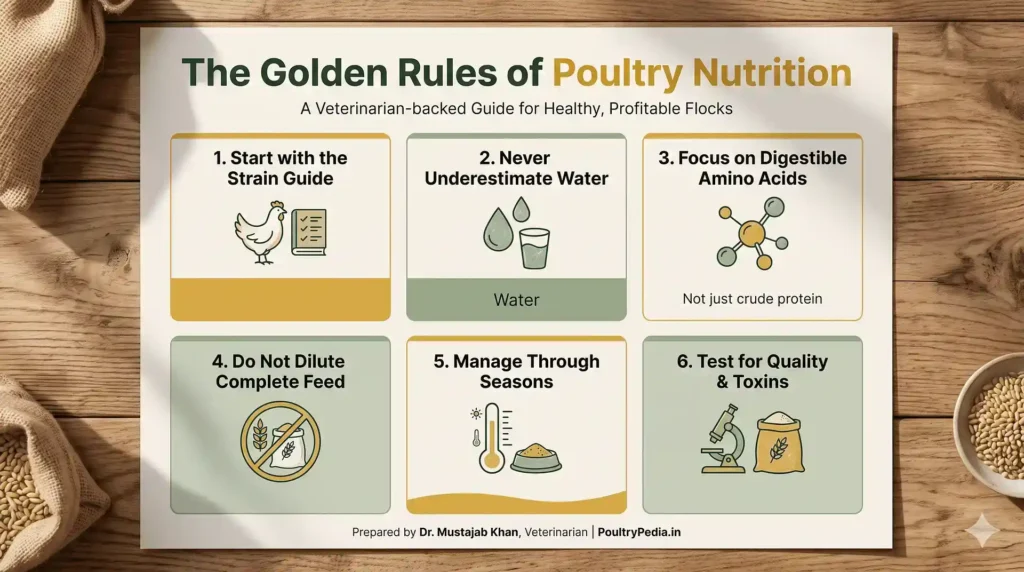
- Start with the current breeder or strain nutrition guide.
- Never underestimate water.
- Don’t judge feed quality from crude protein alone.
- Think in digestible amino acids.
- Don’t dilute a complete ration with grain without understanding the consequences.
- Match the feed to the bird’s age and production stage.
- Monitor calcium and available phosphorus carefully in layers.
- Use enzymes according to the diet and manufacturer’s recommendations.
- Never feed raw soybeans.
- Test high-risk ingredients for mycotoxins.
- Monitor feed and water intake alongside body weight and production.
- Use antimicrobials only according to veterinary advice, applicable regulations and withdrawal requirements.
Frequently Asked Questions About Poultry Nutrition
What are the six major nutrients required by poultry?
Water, carbohydrates, fats, proteins and amino acids, minerals and vitamins.
What is the most important nutrient for poultry?
Water. Birds are affected by water deprivation much faster than by feed deprivation.
Why is crude protein not enough to evaluate poultry feed?
Crude protein does not tell you the amino-acid profile or how much of those amino acids the bird can digest and use.
What is the difference between crude protein and digestible amino acids?
Crude protein estimates total nitrogen-containing material. Digestible amino-acid values give a much more useful picture of the amino acids actually available to the bird.
Why is calcium so important in laying hens?
Calcium is required in large quantities for eggshell formation and also supports skeletal calcium reserves.
What causes wet litter in poultry?
Possible causes include excessive water intake, high dietary electrolytes, poor gut health, mycotoxins, viscous grains, poor ventilation and management problems.
Can maize be added to a complete poultry feed?
Uncontrolled maize addition dilutes the nutrients in a complete ration. If maize is to be included, the entire diet should be formulated accordingly.
Why do birds eat less during heat stress?
Heat changes behaviour and metabolism. Birds reduce feed intake partly to reduce the heat generated by digestion and metabolism.
Why are enzymes used in poultry feed?
Enzymes such as phytase, xylanase and β-glucanase can improve nutrient utilisation or reduce the effects of specific antinutritional factors in suitable diets.
What is the best poultry feed?
There is no single “best” feed for every chicken. The correct feed depends on species, strain, age, production stage, environment, health, feed intake and production target. The best ration is one that supplies the bird’s requirements efficiently and consistently under actual farm conditions.
Final Thoughts
Poultry nutrition is not about finding one magic additive. It is about getting hundreds of small things right, and getting them right consistently: the formulation, the ingredients, the water, the feeder, the storage, the stage, the season and the bird’s genetics.
The science is moving faster than it has in decades. The new NASEM edition, digestible amino-acid systems, enzyme technology, improved ingredient evaluation and tighter antimicrobial stewardship all point in the same direction: precision, balance, consistency and gut health.
But the fundamental principle has not changed. A good feed is one the bird eats, digests and converts efficiently into healthy growth, eggs or reproductive performance.
That is why my approach is simple: Test. Measure. Observe. Adjust.
If you have a nutrition problem on your farm, or a topic you’d like me to cover next on PoultryPedia.in, leave a comment and I’ll try to address it in a future article.
Disclaimer
This article is intended for educational and general informational purposes. Feed formulation, medication, antimicrobial use and disease-management decisions should be made according to the specific circumstances of the flock, preferably with a qualified poultry nutritionist and registered veterinarian where appropriate.
Nutrient recommendations, commercial strain specifications and regulations can change. Always verify the latest breeder or strain guide, feed specifications and applicable Indian regulations before making commercial feed, medication or antimicrobial decisions.
References and Further Reading
Recent updates cited
1. National Academies of Sciences, Engineering, and Medicine (2026). Nutrient Requirements of Poultry: Tenth Revised Edition.
2. aviNews. The poultry nutrition bible just got rewritten – Here’s what changed (September 2026).
3. Engormix. NRC 2026: Requisitos nutricionales en avicultura (June 2026).
4. Aviagen. Latest Arbor Acres, Indian River and Ross broiler management advice (2022 nutrition specifications; 2025 handbooks and Nutrition Supplement).
5. Down To Earth. Prescription for safer food (India’s antibiotic policy and the EU export list).
6. Medical Dialogues. Health Ministry bans 34 key antibiotics, antivirals for animal use.
7. IndiaLaw. Draft notification on two antibiotic families (September 2026).
8. The Wire. Colistin ban in food-producing animals (2019).
9. Central Drugs Standard Control Organization (CDSCO), Government of India. Notifications on antimicrobial restrictions and veterinary drug regulation.
Background material
- MSD Veterinary Manual. Nutritional requirements and vitamin/mineral information for poultry.
- University of Kentucky Cooperative Extension (Jacob J.). Basic poultry nutrition and water-consumption guidance.
- Poultry Hub Australia. Poultry water consumption and nutrition resources.
- Feedipedia. Feed ingredient information, including faba beans and other alternative ingredients.
- University of Georgia Cooperative Extension. Soybean meal processing and quality control.
- Review on amino-acid nutrition and standardized ileal digestibility in poultry (MDPI, 2025), covering digestibility, enzymes and nitrogen excretion.
- Peer-reviewed literature on reduced-protein diets, enzymes and poultry feed ingredients.
Commercial strain guides, current ingredient analyses and farm-specific feed and performance data can differ from older generic reference tables. For that reason this article treats generic nutrient tables as reference points rather than universal prescriptions.